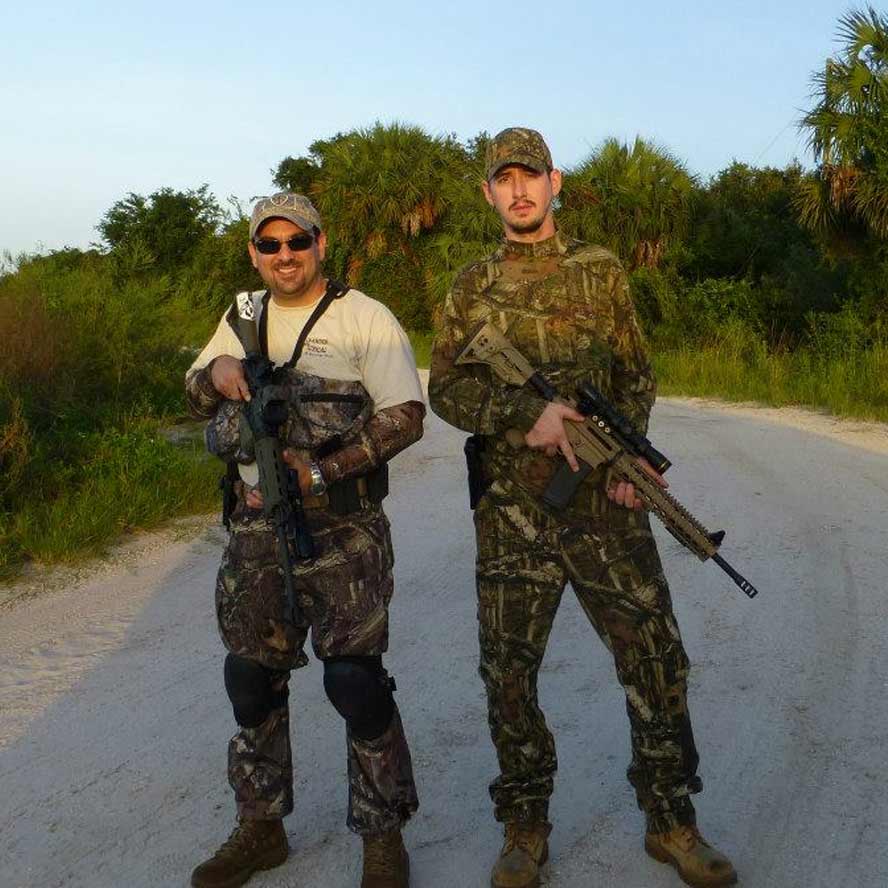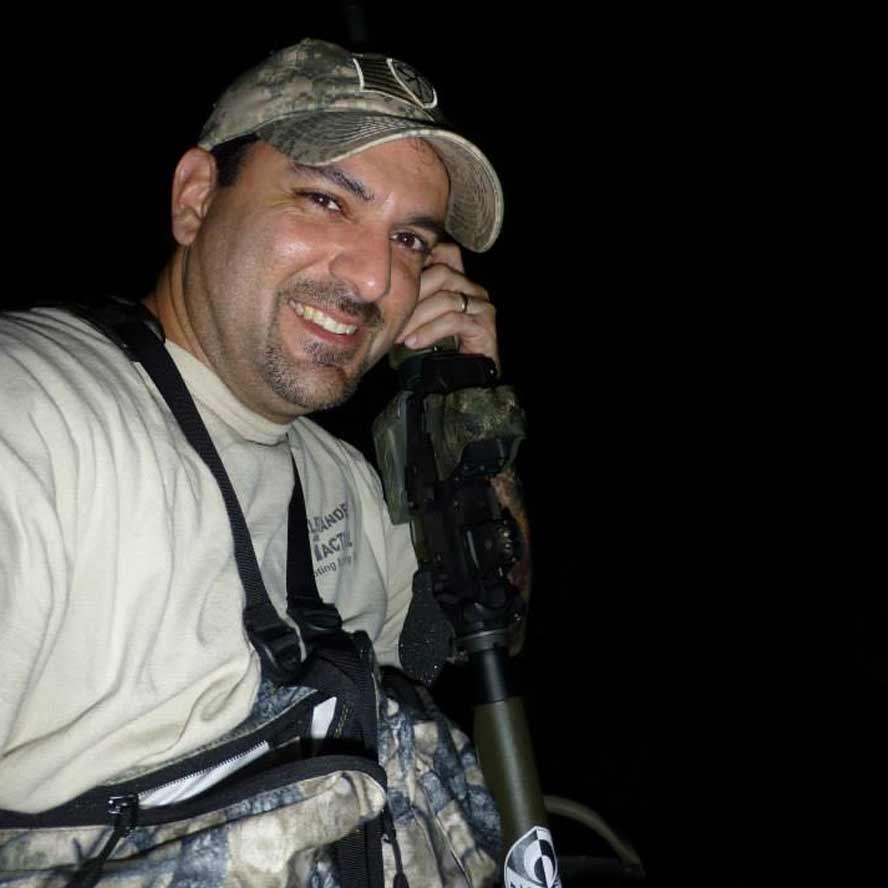
My first night hog hunt didn’t turn out quite as epic as I had imagined, but like any hunt, it delivered its own set of experiences and stories. Every trip into the field is different, and sometimes the real reward is the time spent outdoors with good people. On this particular hunt I was joined by Jared, someone I had known through Facebook. It’s always great to finally put a face to the name, especially when the person shares the same passion for hunting and the outdoors.
Jared and I had been texting most of the week while planning the trip. We agreed to meet at the service station off Snake Road and I-75 before heading deeper into the Seminole Reservation toward Jeb’s Ranch. The drive itself was memorable. The scenery was classic South Florida wilderness, though it came with its share of law enforcement presence along the road. At one point Jared had to slam on the brakes when an alligator darted across the road in front of his truck—an encounter that quickly redefined the phrase “Florida speed bump.”
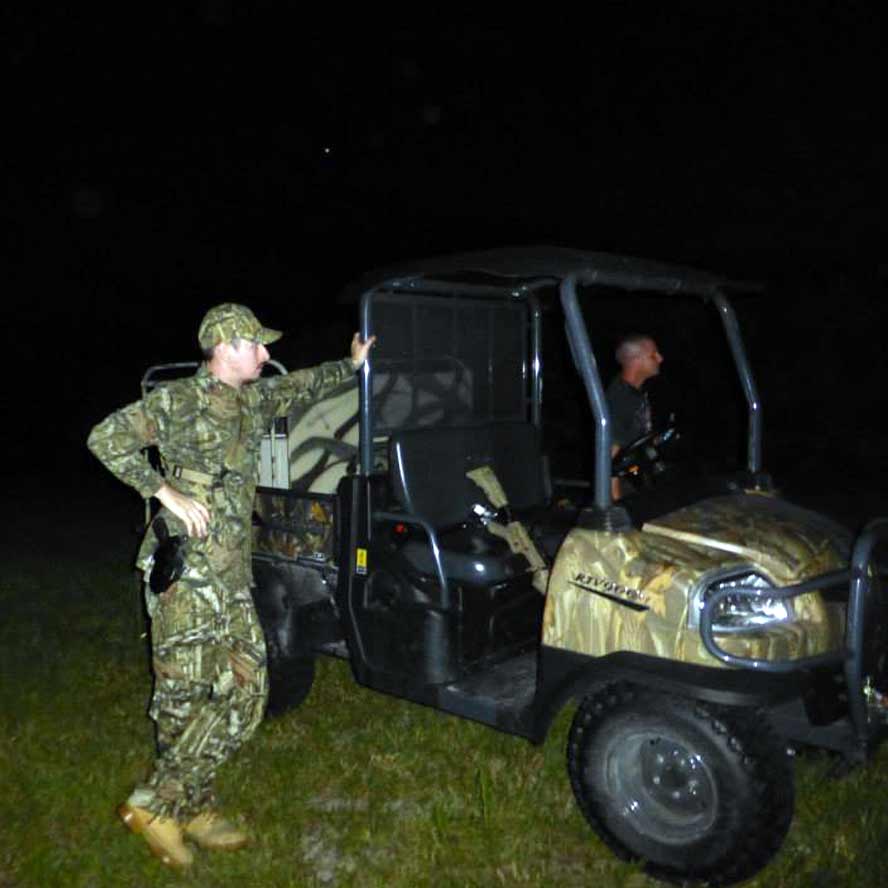
Once we arrived, we geared up and prepared for the hunt. Shortly after, members of Jeb’s crew arrived in a diesel Kubota UTV with dog cages mounted to the back. Jeb pulled in a few minutes later with another truck and more dogs. After a short briefing about the hunt and watching the dogs get fitted with their collars, we loaded up and headed out across the ranch. Jared took a seat on the UTV while I sat on the dog cage in the back. Fresh air is great, but holding onto a rifle while keeping your balance over rough terrain can be a challenge.
We followed a gravel road for a while, scanning the fields and brush lines for hogs before sunset. Not long after, we spotted two large groups of hogs in the distance. Unfortunately, the wind was working against us, and they began moving away before we could close the distance. Jared and I moved into position quickly, but the tall grass concealed them too well. By the time we were ready, the hogs were at least 200 yards away and disappearing fast.
Darkness settled in soon after.
Around 9:15 PM the dogs suddenly picked up a scent and tracked down a boar nearby. Everyone jumped out of the trucks as we prepared to move in. Since only one hunter can safely take the shot when dogs are working a hog, Jeb picked a number between one and ten, and I ended up being the closest guess.
We moved quietly into the oak hammock with my green headlamp cutting through the darkness. The vegetation was thick and the barking of the dogs grew louder with every step. Soon we could hear the deep growling of the boar. I had never heard a hog growl before—it was a sound I wouldn’t forget.
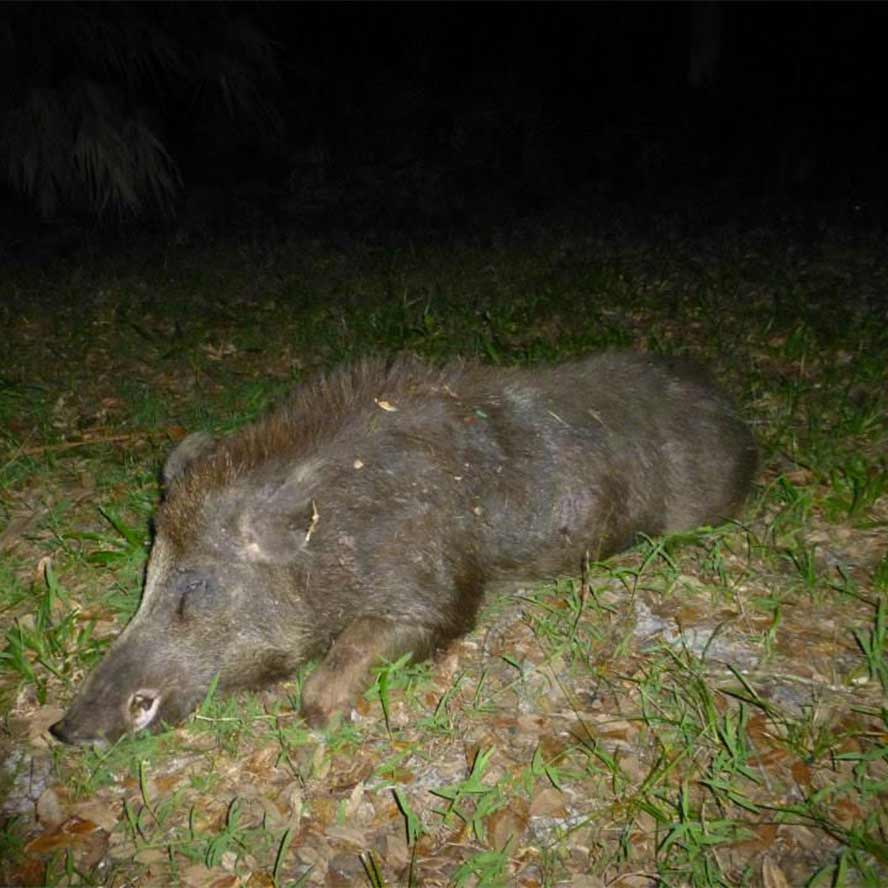
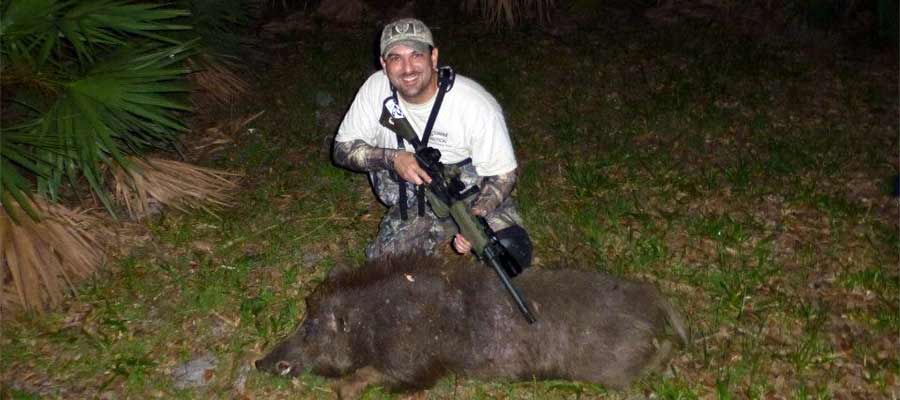
The dogs were darting in and out, keeping the boar occupied. The dark grey hair of the animal stood out against the green palmettos. I kept my finger indexed along the rifle, waiting for Jeb’s signal. A few seconds later he gave the command.
“Shoot.”
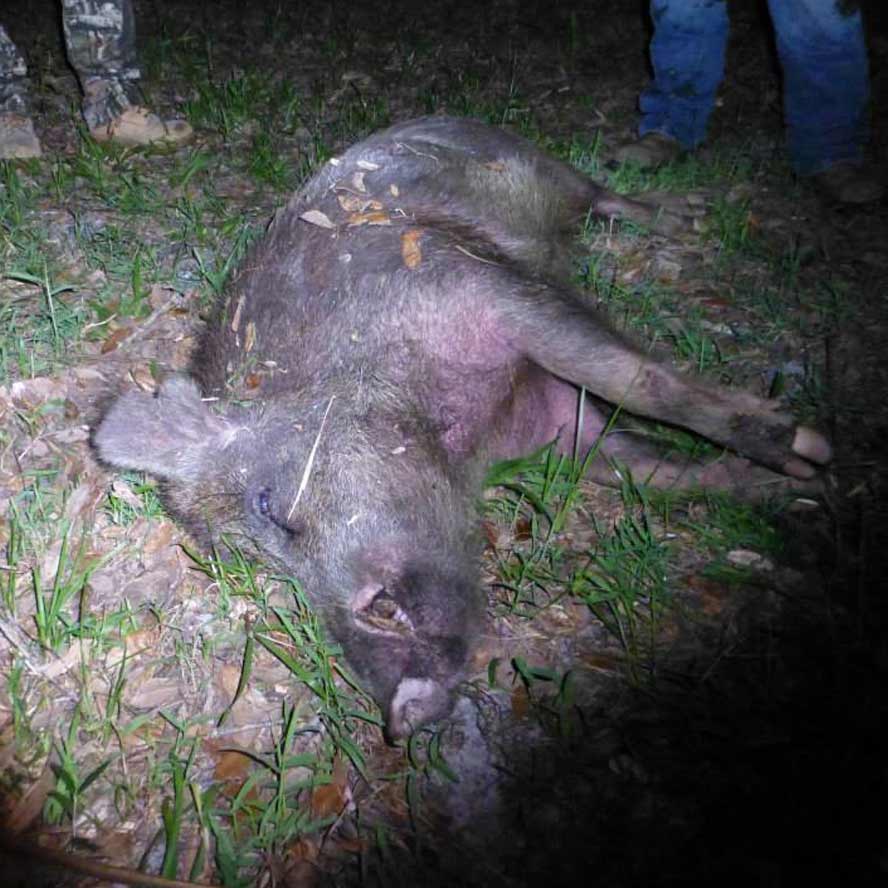
The 95-grain Barnes Triple Shock round from my 6.8 SPC struck the hog just in front of the right shoulder. The boar staggered briefly before collapsing. When Jeb pulled the animal out, we could see he was an old warrior—scarred from past battles and missing one of his cutters. Unfortunately, because of his age and condition, Jeb advised against keeping the meat. No bacon this time.
Now it was Jared’s turn.
We continued searching the ranch for another opportunity, but the hogs we had seen earlier had moved onto a neighboring property. The night continued with a few unexpected moments. At one point Jeb decided to corral a wandering group of cattle using his truck, which turned into a surprisingly entertaining scene. Sitting on top of the dog cages in the back of the UTV while that was happening required some serious grip strength.
Later in the evening the dogs picked up the scent of a raccoon. While it’s illegal to shoot raccoons out of trees in that area, it apparently isn’t illegal to climb after them. One of Jeb’s friends climbed up into an oak tree and spent nearly fifteen minutes trying to flush the raccoon down. When it finally hit the ground the dogs rushed in and chaos followed. The raccoon was eventually freed, but it was badly injured. Jared quickly put the animal down to end its suffering.
By the time we returned to our trucks, it was close to midnight.
While the hunt didn’t produce as many hogs as we had hoped, it was still a successful night. Hunting has a way of reminding you that success isn’t always measured by numbers. Sometimes luck plays a bigger role than skill. What really matters is the time spent outdoors and the memories made with friends and family.
A day—or night—in the outdoors is the real reason I hunt. The harvest is simply a bonus.
Hopefully we’ll try another night hunt later in the year, maybe in August or September when the acorns begin to fall and hog activity increases. If luck is on our side, great. If not, that’s okay too. Even a slow night of hunting is still better than my best day at work.
Cheers,
Erik Alexander – Clewiston, Florida
Night Hog Hunting in Florida
What is a night hog hunt?
A night hog hunt takes place after sunset when feral hogs are often most active. Hunters typically use specialized lighting equipment, thermal optics, or tracking dogs to locate hogs in the dark. Because hogs tend to move and feed at night, these hunts can be very productive.
Why are dogs sometimes used in hog hunting?
Trained dogs are often used to track, locate, and hold hogs in place until hunters arrive. The dogs keep the animal occupied, allowing the hunter to move in safely and take a controlled shot.
What equipment is commonly used for night hog hunting?
Night hog hunters often use rifles equipped with mounted lights, night vision or thermal optics, and cartridges suitable for medium-sized game. Many hunters also rely on off-road vehicles or UTVs to move across large ranch properties.
Why are feral hogs hunted in Florida?
Feral hogs are considered an invasive species in Florida and can cause serious damage to farmland, natural habitats, and native wildlife. Hunting helps control their population while providing an opportunity for hunters to harvest wild game.
Is hog hunting in Florida allowed year-round?
In many parts of Florida, hog hunting is allowed year-round on private land with the landowner’s permission. This makes it one of the most accessible hunting opportunities in the state.